Featured

All of me

img_2799Like most of you, I’ve been finding ways to amuse myself during our COVID-19 quarantine. The picture attached to this post shows you one thing that’s been occupying my time. This puzzle is a compilation of covers from the first 56 Nancy Drew mysteries. I devoured these books as a kid and am surprised at how many of the plot lines apparently have been nesting in some obscure corner of my brain for the last several decades.

This paragraph is a complete tangent, so if you want to stay with the main theme of this post, just skip on. No offense taken. But as much as I loved Nancy Drew, my favorite girl detective is still Judy Bolton. The Judy series ran roughly contemporaneously with ND, although it differed from its more successful sister in several ways. One difference that I always appreciated was that Judy, unlike Nancy, was not a perfect person. She had a temper, acted impetuously, and bickered with her older brother. She also grew older and changed. We meet her in high school in the first book, The Vanishing Shadow. By the time the series ended, Judy had graduated from high school, worked as a secretary, gotten married, and started to take on issues such as the plight of many Native Americans (The Spirit of Fog Island) and anti-Muslim violence (The Search for the Glowing Hand). We had to go see the Dragon’s Mouth at Yellowstone since Judy had traveled there in one of her books. 🙂

Back to the Nancy covers now! I’m loving the puzzle. Putting each piece in place is satisfying. That’s because the picture is only complete when all of the pieces are there. It takes all of them to make the picture perfect. I’m reminded of the old song, “All of Me.” You may already be familiar with it, but this song is worth another listen. I know it mostly from the Willie Nelson version, but the Billie Holiday rendition grabs me like no other. The song may be on the old side – it was written in 1931 – but its wise message endures. Give completely. If you’re in a relationship, give yourself fully to another person. Once you’ve decided on a course of action, commit yourself. When you read or listen or admire, focus.  “You took the part that once was my heart/So why not take all of me?”

Given that perspective, I’m taking this song as my anthem for our COVID-19 experience. I’m all in on lockdown. There’s no cheating to run out and look at the sunset, even if the police are nowhere in sight. There’s no quick run over to a neighbor’s place for a chat, even if the neighbor is in my building and the visit would be undetectable. We all have to do this to protect ourselves and everyone around us. As with my puzzle, if one piece is missing, if one person cheats – the picture is imperfect. And with COVID-19, imperfection could be disastrous.

We will get through this time and look back on it, perhaps, with a weird fondness. Most of us have never experienced anything that binds us so much, that shows us how we truly are all in this together. Remember that “All of Me” became a hit during the Depression. This was another time when we saw how interconnected we are and rose to the occasion to weather it. We can do this. It just takes all of me. It just takes all of us.


Go round and round

Living in Spain has changed me. I’m now a bus person.

Let me explain. When I was a kid, my family didn’t do buses. This was the 1960s and 70s, and like any proper family (we thought), we had two cars and used them both daily. My dad drove to work, and my mom drove herself and us three kids where we wanted to go. We didn’t even ride the bus to school, although the stop was less than a block from our house. In retrospect, I realize that it meant Mom got out of the house a couple of times a day, which must have been a welcome change. I just assumed that she took pity on us and didn’t want to make us wait out at the bus stop in 90 degree heat and 100% humidity. But whatever the reason, we weren’t on buses very often. In high school, I rode buses to the occasional speech tournament, but that was about it.

Going off to college at the University of Texas at Austin changed my relationship with buses. I didn’t have a car, so I rode the UT buses if I wanted to go downtown or to a shopping mall. Sometimes I took the Greyhound to Beaumont to see my family. And during Winter Break my first year, Mom and I went off on adventure on a bus. We caught a Greyhound to New Orleans and saw the King Tut exhibition at an art museum there. The viewing was spectacular, but my most treasured memory from that trip is my mother drinking a hurricane at Pat O’Brien’s Bar on noisy Bourbon street. She was happy – partly from being somewhere fun, I hope, and partly from the rum. The memory makes me smile.

In law school I moved off campus and acquired a car, thus fulfilling my destiny as a Texan by having my first big adult purchase be a vehicle. While working in Houston as a clerk for a federal judge, I rode a shuttle to and from the courthouse to my apartment complex, but otherwise I made my contribution to traffic snarls and climate change by driving everywhere.

After Mark and I got married and moved to Austin, the only buses in our lives were the ones in the song we sang about a million times to our babies (“The Wheels on the Bus Go Round and Round,” with appropriate hand motions, of course) and our kids’ school bus (because I was clearly neither as home bound or as kind as my mother, although, in my defense, Austin does have better weather than Beaumont). Admittedly, we did ride tour buses when traveling; in London, I went absolutely gaga over riding on the top level of double decker buses. The stiff upper lip types probably thought (correctly) that I was a complete dork, but so what? But the most memorable bus was a local one that we rode from Mexico City to Teotihuacan. By and large our fellow passengers were rural Mexicans, loaded down with large sacks of whatever they’d presumably bought or tried to sell in the city. One woman had a live chicken tucked cozily under her shawl; remarkably, it was one of the quietest passengers that day. But these jaunts were the exception, and mostly we drove and flew to move around.

That all changed when we moved to Spain. We don’t keep a car here. Our apartment sits in the center of the city, and we walk to the beach, grocery store, pharmacy, hardware store, restaurants, bars, and the like. If we need to venture far afield – say to Carrefour, our equivalent of Target – there’s a convenient city bus that residents like us can ride for free. To get to the nearest rail station or airport, we take an inexpensive bus from our local station. And I’ve become quite a fan.

We’ve discovered that riding a bus is something of an art. The bus schedule is a suggestion, not a mandate, due to traffic, construction, and how often the driver needs to go to the bathroom. All of this is perfectly reasonable. But it does mean you need to be early to your stop (in Spanish, your “parada,” which always makes me think there should be a band), in case the bus is early. You also should have something interesting to do on the bus, in case the ride turns out to be longer than anticipated, but not so interesting that you get engrossed and miss your stop. I have almost missed my stop while buried in a book, so this is definitely a note to self as well as to anyone who’s thinking about riding buses. And I always carry my trusty fan, in case the air conditioning isn’t quite as robust as one might hope.

But riding a bus often turns out to be fun. You can meet interesting people while waiting; yesterday, for example, I met a woman who’s originally from Poland, has lived and worked in San Francisco, Miami, and Vancouver, and is now a Canadian citizen living here in Torrevieja. She spoke perfect English, but it’s fun to visit with Spanish speakers, too. That’s a great opportunity to practice my miserable Spanish, and, unlike in the USA, locals don’t fuss at people who are trying to speak their language and sometimes mangle it a bit in the process. And then there’s the added benefit of getting to see where you’re going; when you’re driving, (I hope) you’re focused on the road and not the scenery.

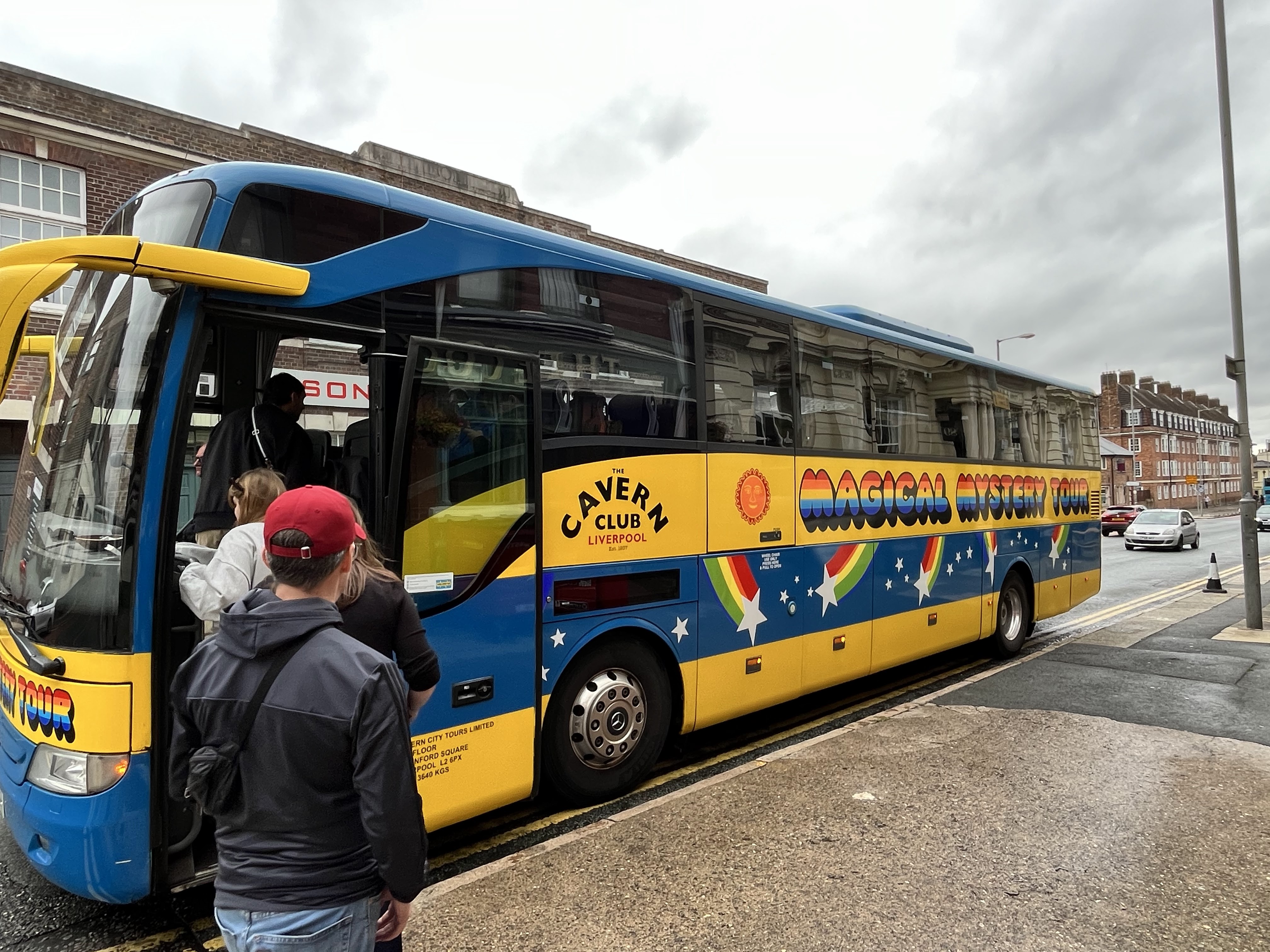
So we’ve become more invested in public transportation, which is both good for us and for the environment. Maybe you should give it a try as well, if that’s not in your personal routine. You may be surprised at how much you enjoy the experience. And when you travel, try out the local bus system instead of always opting for a taxi or Uber. And of course don’t hesitate to take the fun bus tours when you visit new places. I’ll leave you with a picture of the bus from our Magical Mystery Tour bus in Liverpool, where we spent a happy day paying homage to the Beatles. Singing “Yellow Submarine” with a bunch of strangers while driving the streets where the Fab Four grew up is one of my fondest memories of this year. Now go make some of your own!

Take a hike

Sometime when you’re really bored, make a list of under appreciated activities. Now, it’s relatively easy to conjure up the ones we like; after all, noticing is the gateway to gratitude, and it’s normal to be grateful for things like eating chocolate, hugging, and dozing by a fire. But once in a while it’s interesting – and instructive – to ponder what you take for granted. And surely towards the top of that list is walking.

Our distant ancestors didn’t take walking for granted. They evolved from the crouched locomotion we associate with gorillas and chimpanzees about seven million years ago, or so scientists theorize. This change enabled them to move more quickly, see predators and prey better, and use their hands while moving. Walking, then, was quite an achievement.

Since then, parents have been the most common champions of walking. We watch with excitement and no small amount of trepidation as our babies change into toddlers. We lean down to offer our gigantic adult hands to clasp their tiny ones, stabilizing and reassuring the hesitant learner. Soon enough we’re chasing eager, fierce little runners, fleeing parental control in gleeful (or furious) assertions of growing independence. And then we spend the rest our our lives watching them walk – into kindergarten classrooms, down beaches on vacations, across stages, into dormitories, down flower-festooned aisles, across rooms while chasing their own toddlers – the list is endless, it seems.

But parents are by no means the only advocates of walking. Think of all the physical therapists and their patients; these folks work tirelessly to enable people to walk, to walk again, or to walk better. Health professionals and fitness gurus urge us to walk every day (10,000 steps, anyone?) And there are so many more walkers – entwined lovers strolling, trainer-shod tourists gawking and taking the same pictures others of their species took before them, solemn mourners shuffling slowly by a flower- draped casket.

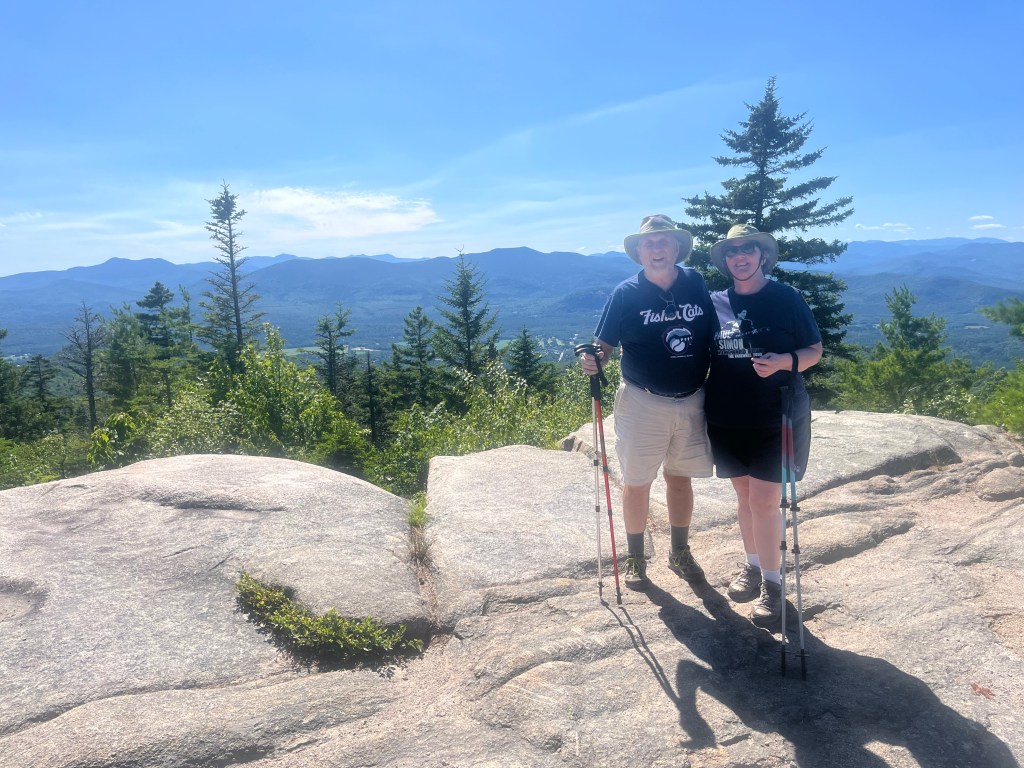
But I want to focus on hiking, a special type of walking. Mark and I go on gentle hikes when we’re in New Hampshire; it’s glorious to be outside and moving on a pretty day. In the Spring and Summer, watching the dappled sunlight peek through green leaves and listening to water flowing down stony stream beds. And in the Fall, you walk when the light is paler but the dry leaves add their unique rustling to the outside’s chorus. Granted, we avoid the hardest hikes and steepest climbs, although we did make it to the top of a short mountain, Black Cap. Besides being good exercise, hiking makes me feel strong and capable. A hike, for me, is an accomplishment.

That’s one reason I’m so distressed at the evisceration of the National Park system and proposals to sell off public lands. Typically, a park is available to all comers or charges only a small admission fee. And once you’re there, it’s perfectly okay to have no agenda, and advertising and marketing are kept to a minimum. You just walk, across a sandy beach or on a small trail. Sticks are for balancing, not hitting, and phones are for checking maps or taking pictures, not constant scrolling or conversation. You can be alone with your thoughts, even if they’re only about when to stop to drink water or where the next bathroom is. In a world where waiting rooms sport constant TV chatter and screens on gas pumps try to sell you candy bars, hiking is a welcome oasis of calm.

If we lose our parks, we lose our wild places to walk. We must advocate for these beautiful treasures with all of our might. So take a hike, friends, and I mean that in the best possible way. And take a hike, politicians who would rob us of our joyful places and steal our descendants’ inheritance, and I mean one-way, out of governmental circles. Leave the rest of us to walk in peace.

Actually, there is crying in baseball

Most of you know that my husband is a big fan of baseball, and I began following the sport when we became a couple. Forty years and change later we therefore found ourselves in Cooperstown, New York, at our fourth visit and third Induction Weekend. For the uninitiated, that’s when the new Hall of Fame players officially join the Hall.

We’ve come for the induction of all three Astros who are in Hall: Craig Biggio, Jeff Bagwell, and, this year, Billy Wagner. Having watched them play in Houston, we enjoyed seeing them receiving baseball’s highest honor. Attending Induction Weekends also becomes a bit of coup-counting among the more competitive (read: Yankees) fans. Remarks like, “How often have you been here? (Fill in number) times? Well, I’m (fill in the number one or greater) ahead of you. I started coming with (fill in a player, always referred to by first name, like you’re buddies) and keep coming back.” I’m just grateful they stopped at comparing years and forewent any comparisons related to male anatomy.

As for Mark and me, this weekend we did pretty much what we have done twice before. We attend the events. Mark pays to have players sign baseballs, and I urge him to buy even more signed balls at the souvenir stores lining Main Street. We buy tshirts featuring our favorite inductee. We sweat a lot, as most of the events are outside. And we look for places to park. Minus sleeping and eating, that’s a fairly comprehensive summary of our weekend.

One thing we haven’t done is participate in events or shopping related to baseball movies, which is a whole baseball subculture. This year, for example, actors from “The Sandlot” signed autographs – for a price, of course. Also for sale are signs with baseball movie lines or riffs on those lines. The pizza place where we ate lunch today, for example, proudly proclaims on a wall hanging that “If you feed them, then they will come.”

This year the hottest movie seemed to be “A League of Their Own,” which is certainly a favorite at our house. Some years after seeing this film, we traveled to Cooperstown and got autographs from members of the All American Girls Baseball League. Of course, no big autograph company organized their signings; instead, these baseball veterans posted up under someone’s lawn umbrella and signed balls for $10 a pop, a sum that wouldn’t even get you the “B” from Billy Wagner. Big surprise.

But this year memorabilia from ALOTO was in stock at most merchants’ sidewalk tables and in several stores. I bought a Rockford Peaches T-shirt (peach-colored, of course). But most of the items featured Tom Hanks’s most iconic line in the movie. I probably walked by a dozen vendors with signs, pictures, and shirts all proclaiming that there is no crying in baseball. 

I’m here to tell you that Tom Hanks – really, the scriptwriter, I suppose – is wrong. 

We’re often taught in this country that athletes are supposed to be strong, which then translates into stoic. Play through the pain. No pain, no gain. Just rub some dirt on it. And to be sure, athletes do often play when they are hurt, sometimes grievously. Just like they play when they’re angry or sad or discouraged or even frightened. But they don’t cry, right? 

Sure – except when they do. We saw that this weekend Billy Wagner teared up during his Induction speech – shoot, he teared up in a pre-speech video discussing whether he was going to tear up during his speech. CC Sabathia, who is one big dude even though he’s lost 40 pounds since retiring, talked freely about how he started crying during the Induction speech by the son of Dave Parker. Parker, a star player, had been denied admission to the Hall for years, in some large part because he was Black and not submissive. He died a month before Induction Weekend. And there wasn’t a dry eye in the house when Dick Allen’s widow talked about how her husband, a Black superstar, was treated by the Philadelphia fans in the 1960s. Let’s just say that the City of Brotherly Love failed to live up to its name, and the the Hall of Fame followed suit by waiting decades to honor Allen. 

So trust me, there’s definitely crying in baseball, at least at Induction Weekend. There are tears of grief, of sorrow, of shame, and of overweening joy. And it’s a glory to behold. 

Now, don’t get me wrong: I still love A League of Their Own, and I understand that the no-crying line beautifully advances the film’s story of learning about gender norms and coming to terms with our own blind spots as we learn and grow. But I’d like to think that Billy and CC (see above about first names) showed us just a bit of what athletes are really like – ready to do tough things to get their jobs done, but also fully human. They have the tear tracks on their faces to show it. 

Stars

Once upon a time, there were a couple of dozen women who lived and worked in Austin, Texas. Most of them were lawyers, but not all. Most of them were about the same age – born in the late 50s or early 60s – but not all. Most were white, but not all. Most of them had spouses or partners, but not all. Most of them were moms to children, pets, or both, but not all.

What these women did have in common, though, was way more important than what they didn’t. They were all smart, funny, progressive, and politically aware. They had too much on their plates and got too little sleep. They all worked for equity and justice for marginalized folks. They read a lot, laughed a lot, and got angry at the crap going on in the world a lot. And, perhaps most importantly, they all loved good food and good wine to go with it.

Thus was born a dinner group that’s lasted for over a quarter of a century. We – for I’ve been privileged to be a part of this amazing group since its inception – go by the unlikely name of the Stellas. One of our members proposed the name because it was what Australians call women. Of course we had nothing to do with Australia, and actually Australians call women “Sheilas” instead of “Stellas,” (and Sheila is apparently not a compliment when they do), but the name stuck. And we’ve been the Stellas ever since. It fits, really; Stella mean star, and these women are stars in my firmament.

As you can imagine, given the amount of time we’ve been together, our lives have evolved substantially over the years. We’ve changed jobs, moved, and run for political office (sometimes successfully, sometimes not). We’ve acquired and lost relationship partners. We’ve seen hopeful and hateful political swings. We’ve welcomed children and grandchildren and mourned the deaths of the children of a couple of the Stellas and many of our parents. We’ve eaten more salads and cheese and casseroles and hearty soups and crusty bread loaves than I can count, and we’ve drunk enough wine to keep a small vineyard in business for a year or so. Our evenings together made all of those changes and challenges easier to bear or celebrate, depending on what was appropriate.

And now we’re dying.

The two women in the picture are already gone. Vivian, on left, died from aplastic anemia five years ago. Ana, on the right, died from cancer about a year and a half ago. And I got word this afternoon that another Stella, Susan, died of cancer a few hours ago. I miss them all like I would miss an arm that got cut off. These women are not just a part of my life, they’re a part of me. And they are gone.

I’m grieving now. Time will help the hurt, and I know, as Tennyson said, that though much is taken, much abides. But I ache for these beautiful women who should have had at least another 20 years of Stella’s Suppers – and grandchildren and travels and books and hugs and all the joys that life can bring. And to borrow from another brilliant writer, Shakespeare, my heart is in the graves with them. And I must pause till it come back to me.

The Upside (of) Down Under

Remember me? I blog here. Yes, it’s been a minute since I last posted. That’s a long, busy, mostly happy story. But I’m back and checking in from New Zealand. 

Here’s the deal on our latest venture. Mark and I squirreled away United Airlines points for a decade or so in anticipation of this trip. A few months ago, we spent most of them for two round trip Business Class seats/lie flat beds, teed up three weeks in NZ and three in Australia, and packed our bags. We left Austin last Sunday for San Francisco and thence to Auckland, toasting our 1.2 million miles with the preflight champagne offered in Business Class before takeoff.

So here we are, having pretty much skipped Monday (not necessarily a bad thing) on our way over the Pacific and landed in God only knows what time zone we’re in. 

And now we’re down under, having visited friends of ours in Whangārei and friends of a friend in Nelson. (In the Māori language, Nelson is called Whakatu. Since “wh” is pronounced as our “f” in Māori, I’ll leave it to you to figure out why this is funny in English.) We also took a gorgeous cruise in Abel Tasman National Park yesterday, viewing jaw-dropping scenery, admiring ferns as tall as trees, oohing and ahhing over sleeping seals, and cramming the rails to watch dolphins frolic near our boat. One dolphin, obviously a teenage male, was following the boat way too closely and breaching spectacularly high alongside. My theory is that the dolphin didn’t care squat for our opinions but was trying hard to impress a nearby girl dolphin.

As fun as this trip is, it’s been a bit disorienting. Of course, all travel disorients you somewhat – gender may be a construct, but jet lag is real. And don’t get me started on trying to remember where the bathroom is in your third hotel room in as many nights (although let me hasten to add that I’ve always found it in time). The worst, though, is how different showers can be. Some, of course, are the easy peasy pull the handle and water comes out kind. There’s no problem there. But then there are the ones that should come with instruction books the size of the ones in your rental car. We had on in Reykjavik that I never did figure out. I’d just pull, push, and turn things until water came out. It’s like Heraclitus said: I never stepped in the same shower twice.

New Zealand, though, presents me with a whole new level of brain Whakatus. First of all, I’ve shared the driving with Mark – on THE LEFT SIDE OF THE ROAD. I’ve been a passenger like this before, but never a driver. Rationally, I know that I’m fine if I just keep my car in its lane and trust that all the other drivers will do the same. That’s my hominid brain’s position on the undertaking. Meanwhile, my fear-driven primitive brain is screaming “YOU’RE IN THE WRONG LANE AND YOU’RE GOING TO DIE!” at all times. That’s disconcerting, to say the least, and quite wearing as well. No wonder I’ve taken so many naps here.

Likewise, I’m a bit startled by various things for sale here. I shouldn’t be; I’ve been to markets in Asia and Latin America, for heaven’s sake. But when we strolled through a food and crafts market in Nelson – I bought really cute earrings made from NZ postage stamps – we came upon a vendor selling, of all things, dried goat tracheas. That was a cause for pause. And it’s very common to find knitwear shops selling garments made of possum fur. Possums are invasive predators here, so I guess it’s good to use up the animals people kill. However, we passed on the possum and went for more familiar merino wool socks.

The most existentially mind-bending thing for me, though, has been the whole question of what continent we’re on. I’d always assumed that (a) every piece of land was assigned to a continent, like all students were assigned to a home room in high school, and (b) New Zealand was assigned to Australia. (Sorry, Kiwi friends!) That would be a big fat noperino on both scores. Some places aren’t on continents, which simultaneously makes geographical sense and offends my sense of orderliness. To make matters worse, New Zealand is ascribed by most geologists these days to a 94% submerged continent called Zealandia. But there’s a big debate about: whether you can call a mostly-submerged landmass a continent, and, if you can, how many continents there are – seven, eight, and nine are the numbers being bandied about. Dammit. I distinctly recall making a 100 on my “Name the Seven Continents” quiz in third grade geography. How hollow that victory rings now. And I was just beginning to get used to Pluto not being a planet. 

So the bottom line is that you definitely should see New Zealand if you can, but you can expect to be surprised when you do. But then travel always does that, doesn’t it? It makes us see that the world is different than we thought and that maybe you shouldn’t be quite so wedded to what you think you know. So bring on the broader horizons, you lovely Kiwis, and continue to show me the Upside of Down Under.

The Case of the Missing Monument

The title is, of course, an homage to Nancy Drew. But this blog post isn’t about girl detectives; it’s about coincidence, family, history, curiosity, politics, and sorrow. (Are you hooked yet? That’s the purpose of an introduction.)

The family part comes first. Mark and I are currently in Indianapolis, visiting our daughter Mary. A couple of days ago, Mark received an email from one of his uncles. This fellow is the family genealogy buff, and he wrote about discovering that their shared many times great-grandfather was buried in Indianapolis. Thus, coincidence.

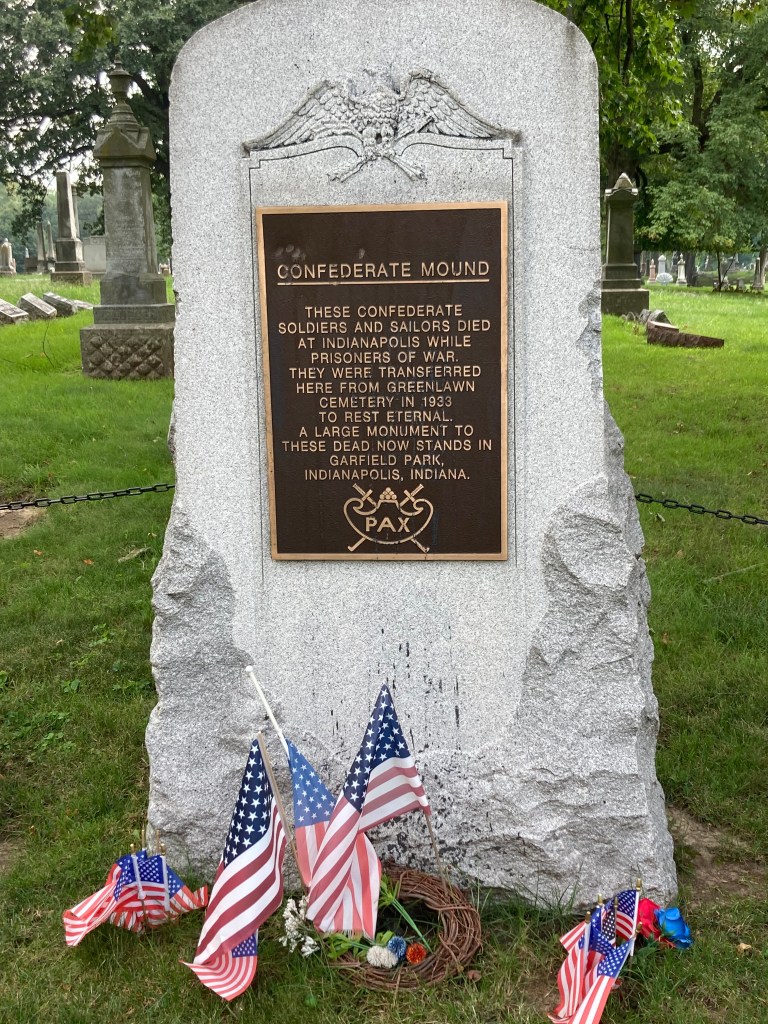
Apparently said many times great-grandfather, Wiley J. Hendon, was a Confederate soldier. He served in the Clark’s 14th Infantry during the Civil War and was captured. Hendon was sent to a POW camp here in Indy. He died there on April 1, 1864 and was buried in a wooden casket in a field with other POWs. Seventy years later, the POW graves were moved to a different cemetery. By that time, the remains could not be identified, so they were interred in a common grave. According to Mark’s uncle, the city erected a monument to the dead Confederate prisoners in a local park and put up headstones with the men’s names and information in the cemetery where they were buried.

Naturally, we were curious. Mary was at work, so we drove out to Garfield Park to find the monument. The internet provided a handy picture of the monument and stated that it, fittingly, I guess, was close to the Southern Street entrance. But we couldn’t see it anywhere. Finally we stopped and hiked over to ask a young woman who was watering a bed of flowers. “Oh,” she said, “It’s not here any more. They took it away a couple of years ago. It’s in a warehouse somewhere, and all that’s left is a circle and some random boxwoods.” She gestured towards a road. We thanked her and walked back to the car, processing the fact that Mark’s family, our children’s family, was now part of a hot contemporary political debate about removing Confederate monuments from our public spaces. We did find the empty circle and the random boxwoods, by the way.

Humor helps. After making the requisite Raiders of the Lost Ark jokes about artifacts in warehouses, we drove to the Crown Hill Cemetery. Our online guide let us know that the gravesite was near Benjamin Harrison’s memorial, so we followed the signs there and soon found the Confederates. The pictured memorial – ironically surrounded by American flags – marks the site of several ground markers with prisoners’ names, regiments, and dates of death. Included on the listings were two “Negro servants” whom I suspect we were enslaved men. The regiments are sorted by state, so we found Wiley without too much trouble. We stood there for a bit, in the shady, peaceful spot marking the grave of so many men who died as a result of cruelty and violence.

By the way, Benjamin Harrison’s memorial is very nice. Apparently the local Garden Club keeps it supplied with flowers and a wreath.

So here we are at the sorrow, folks. Let me be clear: neither of us is sorry that the monument in the park is gone. History has not been erased; it’s been put right. No one should glorify the Confederacy or the people who fought for it. The men who died in its service are named and buried, part of the national tragedy that is the history of race in America, and they serve as an object lesson in how not to treat other people. That, and the fact that my precious Mark wouldn’t be here if not for the man in that grave, is Wiley’s legacy.

So Mark and I agree that we’re sorry that our ancestors held people in slavery, that they lived in a society where that action wasn’t just normalized but was seen as an economic necessity and a mark of prestige. And although neither of us feels responsible for those people’s choices, we do feel responsible for doing our bit to change contemporary racial dynamics. And part of that is saying here that we’re people affected by the removal of the Garfield Park monument, and we applaud that action. And I’m glad that the cemetery is there, so that we can know a little more about the family before us. Rest in the peace you denied others, Wiley.

Como what may


Mark and I have spent the past few days in northern Italy at lovely Lake Como. This place deserves its reputation as a gorgeous spot. White, puffy clouds laze around the tops of green Alps. Sunshine sparkles on the emerald blue of the lake. We have a darling little apartment a stone’s throw away from the lakeshore. We’re spoiled for choice in restaurants and bars and have been getting around nicely in our rental car and on the boats carrying passengers around the lake. Of course I’ve posted pictures on Facebook, receiving kind comments in return. But one of these responses has bugged me this week. It was “It’s just perfect!”

Now, I know that this reaction is actually just a bit of hyperbole, because everyone knows that nothing on this planet is actually perfect. I think. But what troubles me about this kind of statement, though, is that somehow it plants a niggling little suggestion in your mind that something out there is perfect, and that if your experience it as less than perfect, there’s probably something wrong with you.

So instead of telling you how perfect Lake Como is, I’m going to tell you some of the imperfect stuff from our trip.

  1. Our apartment may be adorable, but the hot water in the shower strongly resembles the Holy Spirit: it comes and goes as it will. No amount of futzing with the temperature control fixes this problem. All you get for your trouble is the opportunity to endure more blisteringly hot/teeth-chatteringly cold spray. And all of this is happening in a space roughly the size of the average Amazon box, so there’s no place to hide.
  2. We’ve had a couple of very mediocre meals here. For example, my lunch on the first day in Como featured lukewarm green beans and a cod “hamburger” that consisted of two small rounds of grilled fish complete devoid of any flavoring. I ate it, over the objections of my taste buds, because breakfast had consisted of two and a half brownies at 3:20am.
  3. The roads here are crazy. The main road on our side of the lake is narrow – okay, Mark has driven narrow before, like in Ireland – BUT EVERYONE IS DRIVING TWICE THE POSTED SPEED LIMIT. Motorcycles and scooters routinely appear out of nowhere to cut around cars, cars dash around curves on the theory that on the whole it’s better just to get them over with, and people walk in the streets because there’s no place else for them to walk. It’s a perfect traffic storm, and I’ve missed some great scenery because my eyes are squeezed shut a fair bit of the time.
  4. People who told me I’d understand a lot of Italian because I understand a lot of Spanish lied to me. For example, we’ve frequently seen road signs that say “Ignitzio cantieri” and then, a bit later, “Fin cantieri.” Since “cantar” means to sing in Spanish, I assume we’re supposed to break into song during these intervals in our journey. So far I’m just humming a little and hoping that’s enough to keep the police at bay. Those dudes carry very large guns, and they all look like they’re about 12 years old. Firearms and puberty are never a good mix.

    So life at Lake Como isn’t perfect. But you know what? We’re still having a blast. The scenery is wonderful. Our apartment has a comfortable bed, a working refrigerator, and a darling little terrace covered in grapevines. We’ve had some spectacular wines and cheeses and even did a wine tasting at a small family vineyard today with three guys from Germany and a couple from Switzerland. (I’m still wondering about the bona fides of the guy in the couple, because he told me he runs a beach bar for a living. Do they have those in Switzerland?) Nobody has hit anybody or anything on the road (yet), and I’ve pretty much decided to stick to “grazie” and “toilet” in the local tongue.

    Apparently, then, I don’t need perfection in my life. Give me good enough and I’m a happy camper. There’s real pain and tragedy in this world; trying to focus on the good is the best trick I’ve got up my sleeve to deal with it. Como what may! (Sorry, I couldn’t resist that one.)

Dance with me

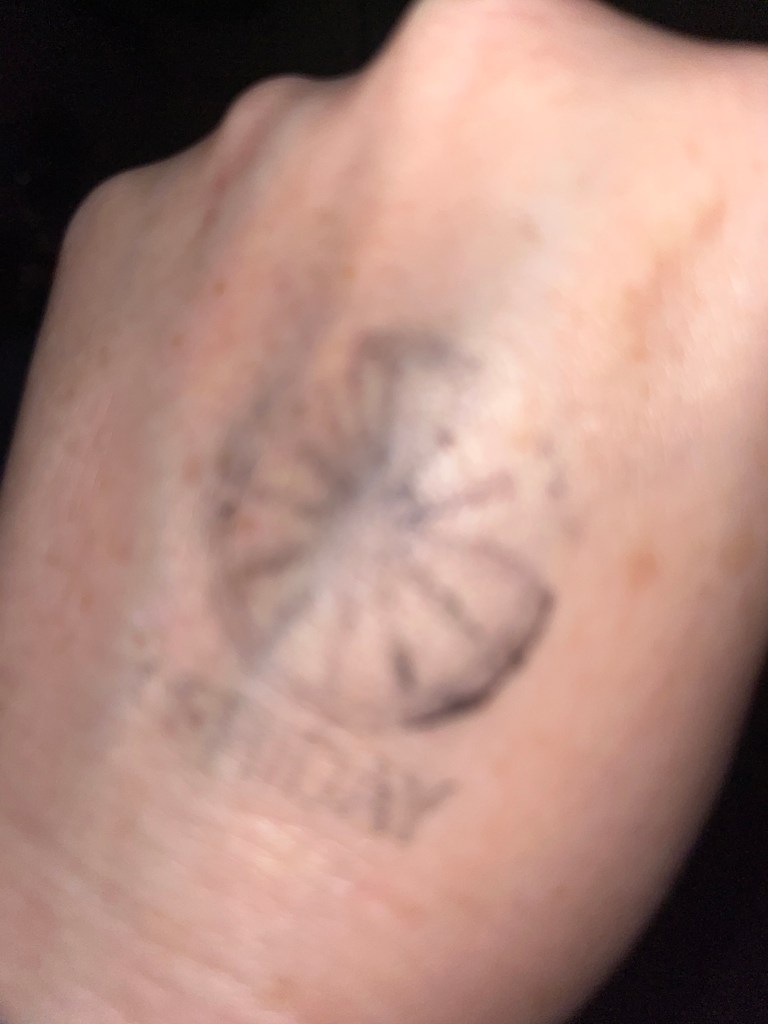
A couple of weeks ago, Mark and I went with some friends to dance at The Broken Spoke. It’s been a minute since I had a hand stamp, so I thought I’d share this picture with you.

The Broken Spoke, for the uninitiated, is a decades-old honky tonk in Austin. It’s a little less honky than some places; for example, there’s no chicken wire between the patrons and the band to protect the musicians from beer bottles, fists, chicken fried steaks, and other potential missiles. But the Spoke still has a creaky wooden floor, mixtures of all sorts of uncomfortable chairs at the tables, and a lot of beer flowing, despite the face that the building is now surrounded by high rise condos and apartments. On a given night, all sorts of folks will be dancing there. You can tell the serious couples because they have on matching outfits – or Stetsons, as was the case of a black-hatted couple the night we were there. As usual, some of the dancers were giggling, some were grimly determined, and more than a few were very well lubricated indeed. We had one particularly notable couple in that last category. They were dancing without leaving the requisite room for the Holy Spirit between them, but that wasn’t enough for the guy in the couple. He made a grab for his partner’s ass during a turn and nearly dumped both of them on the floor. In a feat of unparalleled upper body strength and sheer drunken mulishness, his partner managed to get them upright again. It was an impressive display on her part. I almost clapped.

Now, this wasn’t the first time I’d been there. I have some history with the Spoke. Bear in mind that I attended a grand total of zero dances in junior high and high school. But it’s sort of a law that you have to go to the Spoke at some point if you’re in Austin. I first went there as an undergraduate at the University of Texas in the late 1970s. Other than the facts that I: 1) didn’t like beer then; 2) disliked country music; and 3) couldn’t dance, it was great. After a halfhearted attempt to master the Cotton-Eyed Joe (a line dance) and only learned enough to yell “Bullshit!” at the right time in the dance, I declined further invitations for, well, decades.

The problem – or the providence, depending on how you see it – is that I married a guy who likes to dance and is actually quite good at it. For many years, I was sufficiently self-conscious about dancing that I’d only do so in public if we were with people I’d never see again. So, for example, I’d happily dance on cruises. That’s been lots of fun. One memorable cruise dance happened while we were on the Norwegian coastal ferry in December 2013 to see the Northern Lights and decided to visit the lounge when our evening’s entertainment, a Swedish guy with an electronic keyboard, was playing and singing. It turns out he knew half of the lyrics to “Crazy,” so Mark and I gamely tottered about on the pitching dance floor; said floor was only about the size of two card tables, but we had fun. And last February we danced in the lounge area on our Nile cruise boat, attired in gallebayas and eventually joined by the guys tending bar. That was fun, too.

But I got braver over the years. I’ve danced at several weddings now, including our daughter and son-in-law’s (and we knew we were going to see them again) and at a few fundraisers and charity events. I still am about as graceful as a moose and have a tendency to try to wrest the lead from Mark, but about a decade ago I had an helpful epiphany about dancing. You know how many people in the whole universe care whether I can dance well? One. Me. No one else gives a flip. And then a couple of years ago I had another epiphany. You know how many people even notice how I dance? One. Me. (Maybe Mark if I step on his feet.) On the dance floor, I’ve quit caring how little people might think of me, because I realized that they were thinking of me so very little. This is truly liberating.

So you know what? I’ve decided that what I’ve learned about dancing applies to a lot of other areas of life as well. I have crooked teeth, but I’m going to smile in pictures. I laugh too loudly but feel free to guffaw when something amuses me. I have wrinkles and age spots, but phooey on makeup. I’m going to wear sandals whether or not my toenails are polished and jeans because they’re comfortable and bright colors because they make me happy. If anybody has a problem with that, they’re welcome to keep that tidbit to themselves.

So the next time you’re feeling awkward or self-conscious or too old for something, feel free to join me in not giving a shit. Instead, visualize me holding out a hand to you as the band begins to play. It’s our song, folks. Come dance with me.

Game on

It’s probably pretty clear from previous entries in this blog that I like to read. A lot. In fact, a psychologist I met at church once noted that we all had obsessions, and I confessed that mine was books. She paused, looked at me and said, “Well, there are a lot worse ones to have.”

She was undoubtedly right, but I have another, slightly less obvious obsession. I love playing online games.

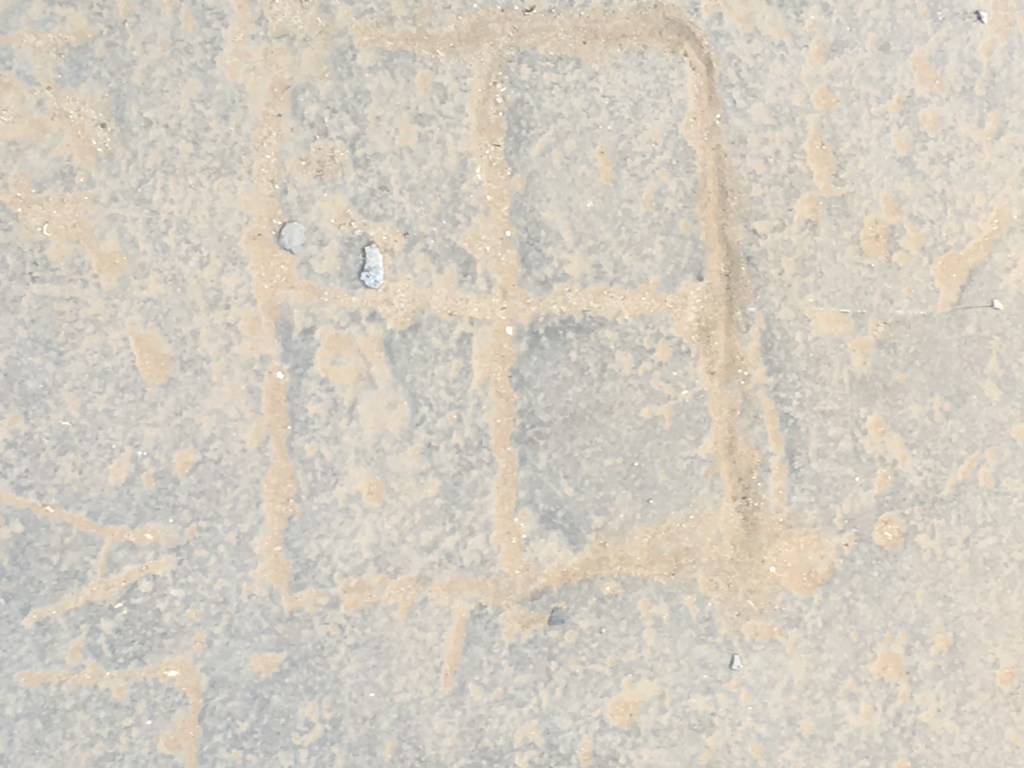
Now, playing games is an old, old practice. Our tour guide in Egypt brought that message home when he pointed out faint markings scratched in the stone walks surrounding a temple where ancient Egyptians came to be healed. The squares were a game, which patients etched in the walkways where they sat and waited. I can just imagine mothers trying to distract sick, bored, and wiggly children. Been there, done that, in many a doctor’s office. A moment of sympathy flashed across the millennia between us.


Slightly more recently, I played lots of games as a kid. Some of these were games my mother made up to keep us from getting too restless while we waited for the doctor to appear, the dentist to finish, the tennis lesson to end, whatever. My favorite was always seeing how many words you could make out of one word. (I’m pretty good at Wordle now, partly as a result.) And we played a boxed game she had as a kid. It was called Fibber McGee and Molly and was based on an old radio show. Basically it’s the same idea as MadLibs, which we played in the car with our kids for ages.

Some of the board games my family had included really obscure ones, like Video Village, which was a version of a TV show, and Broker, which dealt with the stock market and which my brother adored. (FYI he rebelled against capitalism en toto in the 1960s, but that might just have been a coincidence.) I like Clue – I still love mysteries – and a game called Careers, where you could become an actor or a farmer or astronaut, etc., etc. You got points for endeavors in your field. I loathed Monopoly and still do to this day. I played with my sister, who’s several years older than I am and was (and still is) a wee bit competitive. When I was five and she was 11, let’s just say that she understood a lot more about real estate (not to mention addition and subtraction) than I did. Scars remain.

In high school, my friends and I played a lot of Spades in between rounds at speech tournaments and, as old-fashioned as it sounds, Charades at parties. Note: do not let debate partners play on teams in these games. They spend so much time with each other that they kind of know what the other person is thinking. Sadly, I was never invited to a party where we played Spin the Bottle. But I’ve been happily married for 37 years now, so I guess I made up for lost time.

The games I play now are pretty much online. I miss some of my old standards, like Joy Garden, Rocket Mania, and Cradle of Rome. But fear not, for I’ve found other fun ways to spend my time. I still like Tetris and Candy Crush, and I sometimes play a hidden objects game called Seekers Notes. I’m mad at the SN folks, though, because they double charged me on an in game purchase and have basically blown off my complaint. My current obsession is a parking lot game, where I happily move tiny electronic vehicles out of the way of walls, fire hydrants, mailboxes, and sneaky little old ladies who walk around the parking lot and turn abruptly in front of ongoing cars. If you hit a little old lady, you lose, but if you only hit her walker, you get extra points. That’s a bit perverse, but there you are.

Now, here’s the point that always kind of surprises me about playing online games. When you tell someone who also plays them, you generally have a pleasant conversation ahead. But when the other person doesn’t share your taste for such pursuits, you generally get a rather acidic response along the lines of, “Oh, I don’t do that. It’s such a huge waste of time.”

Why is having fun wasting your time?

I think it’s fair to say that I’ve worked hard in my life. I studied hard to get good grades as a kid and participated in lots of demanding extracurricular activities. I put myself through college and law school and did pretty well in both. Post school, I was a wife, a mom, a practicing lawyer, and a law professor and administrator. But I’ve always tried to make room for fun; it’s what feeds me, what makes it possible to get up and do it again the next morning. Whether it’s reading, or watching movies, or traveling, or hanging out with friends, fun is restorative and energizing and comforting. In fact, Mark and I still quote Dr. Seuss to each other, even after all these years: “Such things are fun, and fun is good.”

So here’s to fun – and games! And if you ever want to play a rousing game of Clue, just let me know. But be warned: if you want to play a rousing game of Monopoly, you’re out of luck with me. But I will give you my sister’s address.