
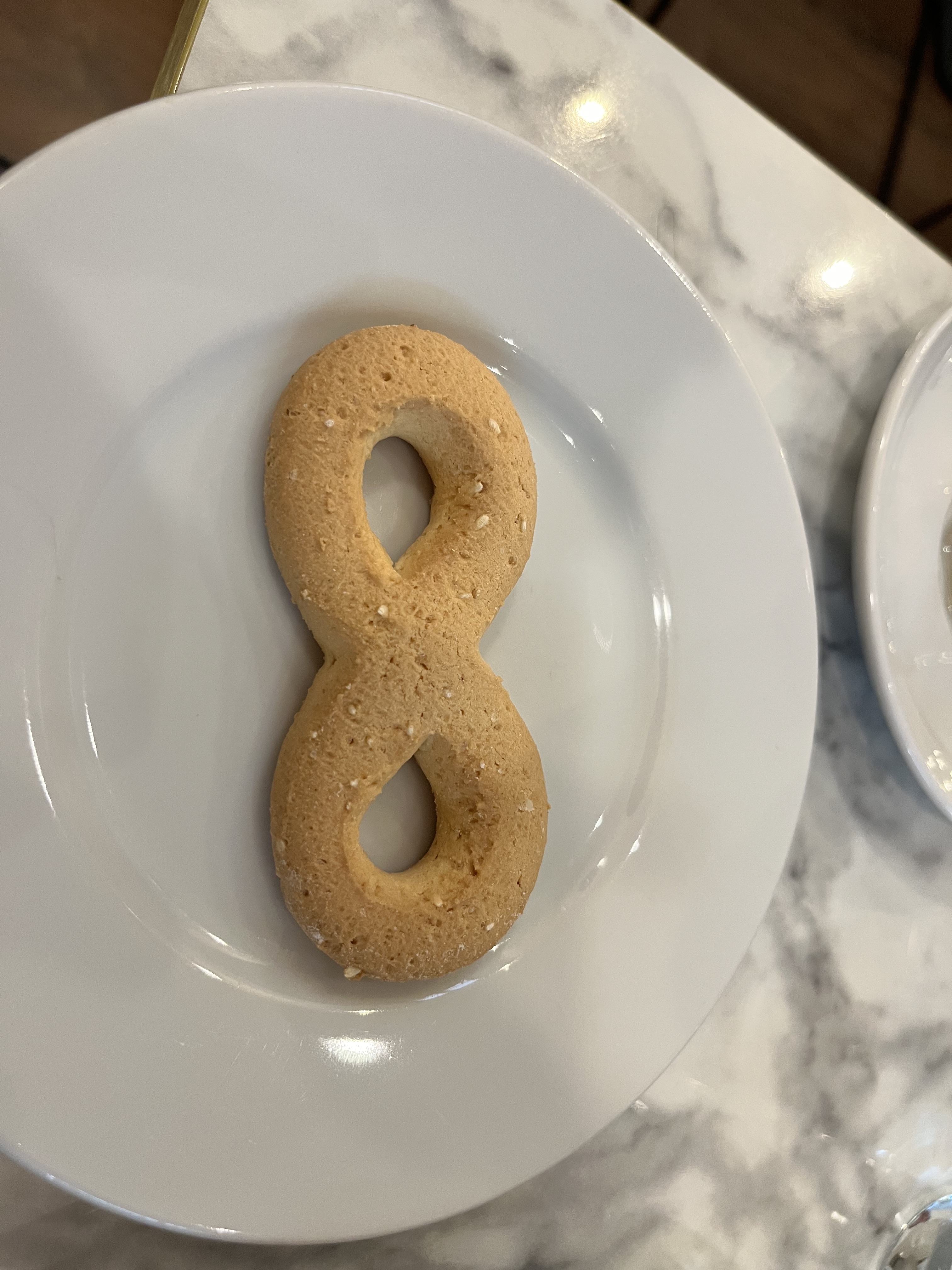
Mark and I returned yesterday from Malta, an island country that punches above its weight in terms of historical interest. I learned a lot during our few days there, mostly about history, but also an important lesson about opening up to other people. And I wanted to share both kinds of learning with you.
Let’s talk about history first, which in this case is to talk about geography. Malta comprises seven islands, with the largest three being inhabited. The capital is Valletta (more about this in a minute), a city with an amazing natural harbor, lots of limestone, and a friendly population that speaks English and Maltese, the latter being at root a Semitic language mixed with lots of Italian. Malta lies in the middle-ish Mediterranean Sea, north of Libya, east of Tunisia, just south of Sicily, and about halfway between Gibraltar and the Middle East. Basically, that position is kind of on the way to everywhere in the area, and apparently Malta has for centuries been what the old Stuckey’s chain was in my childhood: a place in the middle of nowhere to break your journey, go to the bathroom, get supplies for the next leg of the trip, and maybe buy some overpriced souvenirs.
Sovereignty has been a little trickier to figure out. People have been on the islands for millennia; a few amazing Neolithic sites, which predate Stonehenge and the Pyramids, are a must-see for contemporary tourists. At some point France took control of Malta, but Spain grabbed the islands in 1283. Things kind of rocked along for a couple of centuries until the Knights of St. John, who’d been chased by the Turks first out of Jerusalem and then out of Rhodes, asked the Spanish monarch, Charles V, for a place to land. In 1530, Charles rented them Malta, asking only a falcon a year as rent. This would have been easier going if there were any falcons on Malta, but the Knights were resourceful and sent elaborate and expensive falcon statues instead. This not only satisfied Charles but also provided Humphrey Bogart with great movie material centuries later. Charles also got the scrappy Knights, now known as the Knights of Malta, as a bulwark against the Turks, who were eyeing Europe like it was the next course in a gourmet meal.
So the Knights went to Malta, and, sure enough, the Turks showed up in 1551. They were repelled, but they returned in full force in 1565 after defeating the Spanish in Tunisia. Greatly outnumbered, the Knights nonetheless emerged victorious and began turning back the tide of Turkish incursions into Europe. The hero of this remarkable victory was the Knights’ Grand Master, Jean de Vallette. Vallette showed his strategic genius in warfare and in its aftermath, as he touted his victory to European leaders, including the Pope, thereby raising enough money to construct a new capital, Valletta (yes, named after our hero), in a strategic location looking out on the harbor. The old capital city of Mdina (no, I did not forget the “e” – you pronounce this with a hum and a “deena”) remains as a pleasant medieval city that’s fun to wander through.
The Knights built like crazy, erecting a gorgeous co-cathedral and a palace for the Grand Master. The co-cathedral benefited from rivalry among the Knights to put up the coolest ornaments, so the church is over the top in gold, ornate monuments, decorative tombs, saints’ relics, statues, paintings by mere mortals, and the odd Caravaggio. There’s so much gold everywhere you kind of want sunglasses when you walk inside, at least for the first few minutes. It’s amazing.
The Knights held sway in Malta until they were turned out by Napoleon, who in turn lost his foothold to the British, who didn’t leave until they were turned 1970s. In the meantime, Malta was the scene of action in various European conflicts. Most notably, the island was defended by the Allies during a siege by the Axis powers. Italy and Germany bombed Malta relentlessly and sank Allied ships bringing in desperately needed food, ammunition, fuel, and other supplies. Malta was bombed more heavily per capita than Coventry, but the Allies and the Maltese hung in there and ultimately broke the back of the assault on the islands. King George V awarded the entire island the George Cross for its bravery, and that cross can still be seen on the Maltese flag today.
But what, you may be wondering, does this have to do with cookies? I admit to doing a bit of research for this blog post, but a lot of what’s in here I learned from our hotel manager, a guy named Marc. We met Marc at breakfast one morning, although we really weren’t introduced. Mark and I were eating and chatting about what to do that day, and this other fellow was sitting on a barstool and working on his computer. I’d grabbed one of the cookies pictured here and wondered what it was called. So I asked the barstool guy, he responded and then elaborated on Maltese foods, and we ended up having a long chat about Maltese agriculture, religion, and social structures. We ended up talking with him each morning at breakfast and learned lots as a result.
Now, this may sound perfectly ordinary to you, but actually it’s not. I’m an introvert. I generally avoid conversations if that’s possible. There are a million ways to do that: pick up something to read, start coughing and have to procure some water, plead a need for the restroom – you name it, I’ve done it. And if I have to ask for information, I tend to treat the encounter like a convenience store, i.e., get in and out with what I need as quickly as possible. But this time I made a conscious choice to make contact and engage, really commenting on what Marc said, asking more questions, and trying to share some of my ideas. And you know what? The conversations were great, we had a better vacation because of them, and we got to know at least one local person dating our stay. And that’s all due to a cookie and a willingness to be open to a conversation.
So maybe next time I meet someone new, I’ll do what I never do on my computer and accept cookies. In this instance, making a new friend made that treat extra sweet.
 Kathy and Mark’s Frolic and Detour