Lady in waiting

img_0038-1Living by the sea has made me aware of how often our surroundings are changing. The sky is cloudy, sunny, and mottled and threatening in the space of half an hour. The water is turquoise, green, and blue in the space of an hour. The last few days, though, there’s been a remarkably fixed point in our water landscape kaleidoscope. A freighter has been anchored just outside of the harbor, presumably waiting its turn to dock and take on its cargo.

That cargo, most likely, is salt. Torrevieja has been a center of salt-making in this part of the world for thousands of years and today is the largest producer of sea salt in Europe. Two salt lakes, one pink and one blue, provide the raw materials for salt distillation. By the time the Romans sailed into the harbor, salt was being extracted from the lake waters. Being Romans, the newcomers took over the enterprise and, presumably between Punic wars and stabbing people in the Forum and such, improved the manufacturing system and increased salt output from the lakes. To this day, salt hills are visible as you take your chariot from the airport in nearby Alicante into Torrevieja.

But we’re not looking at a galley in my view today, although I swear I see shades of those long-ago Roman sailors during my fancies at twilight. Instead, it’s a modern freighter, and it’s been waiting at anchor in the same spot for a couple of days. I keep wondering what the people on board are doing while they rock back and forth in mare nostrum. What does one do on a ship that’s not sailing? They could all be sleeping in and playing online poker on their phones for all I know. Or they could be terribly busy doing sailor-y things, like mizzening their masts or shivering their timbers. (After I wrote this, it sounded vaguely obscene, but I’m leaving it in anyway.)

Wondering about the sailors and their masts and timbers has got me noticing how much more we wait in Spain than we did in the US and, perversely, how much less I mind it here. This is not to romanticize life in Spain. Some of the waiting is tedious and cold, such as when the wind is blowing and the bus refuses to arrive when I want it to. Likewise, it sometimes annoys the heck out of me that nearly everything shuts down at 2pm for siesta. And don’t get me started about the waits at the municipal office where you get your residency card. Numbers for same-day appointments are given out starting at 8:30am and are all gone by 8:45. And if you’re lucky enough to get a number, you can expect to cool your heels for a couple of hours before seeing an official.

So the waits are real, but for all my grousing I actually don’t mind as much as I have in the US. For one thing, it would be ungrateful to mind too much. The timetable is Spanish, and we are guests here. Besides, once you get over grinding your teeth about delays, you are freed up to see that your way is not the only one. There’s sense in how Spain lives. We’re enjoying riding the bus (see previous post), and siesta is much appreciated after the heavy meal of the day, which is lunch. The municipal officials see scads of folks every day and took pity on our terrible español and found us an English speaker when we went to register ourselves. If we wanted our lives to run like we were in the US, we probably should be back in the US. And that’s not what we want at this point in our lives.

So for now, we wait like the sailors. Or perhaps it’s more like being one of those ladies in waiting I see on Season 3 of “Victoria,” only with much less elegant clothing involved. They wait in the sense that they serve, but they also wait in the sense of hanging out until the Queen finishes yelling at some errant politician and decides its time for everyone to trot down to the reflecting pool to wait for Albert to come out and declare his undying love again. I’m a lady in waiting to the service of our life here, and that’s okay with me.


Spanish jam

No, despite the title and the picture, this isn’t another post about food. It’s about the jam session that is our life right now. I’m not musical enough to have participated in a conventional jam session, but I know it’s a gathering where musicians come together and improvise. Living abroad, and in a country where the primary language isn’t English, is proving to be similar.

Now, I recognize that improvisation isn’t unique to life in a foreign country. When our kids were little, we rented a cabin in Big Sur for a quiet week in the woods. The cabin came stocked with a crib, which was great, but it didn’t have any pans. Zero. As scrambled eggs were must-haves on our children’s menus, this presented a big problem. And the local store – literally the only one for miles around – wanted $18 for a frying pan! Suspecting a conspiracy between landlord and shopkeeper, I was having none of the expensive pan that would duplicate what was already at home. So we bought Jiffy Pop, took it back to the cabin, popped the popcorn, scrubbed the little pan the Jiffy Pop comes in, and had ourselves a frying pan. Take that, price-gouging conspirators!

Life here has called for that kind of creativity as well. Let me give you an example. We had company over a couple of times last week, so of course we cleaned house. We’ve placed a rug we bought at the local market in our living room (“the lounge”), and it needed cleaning. (A vacuum is coming from Amazon.es; cross your fingers that we ordered correctly and don’t end up with a life-size cutout of Elvis or a case of Drano or heaven only knows what.) Having seen the entirety of Downtown Abbey and therefore being an expert on non-machine dependent cleaning, I decided to schlep the rug out to the balcony and make like Michael Jackson, i.e., beat it. Astonishingly, it turns out that modern normal Spanish household accouterments do not include rug beaters. Hmm. Time is ticking away, company is coming, and a shopping trip for Edwardian utensils is out of the question. So what’s the item in the house that looks most like a rug beater? The answer was the pictured spoon, and it did quite a nice job if I do say so myself. Now, that’s the jamming I’m talking about.

Some jamming does involve machines, of course. On an early trip to the grocery store, I searched high and low for dishwasher detergent. I’d hoped to find a familiar brand, but no such luck. Not knowing the word for “dishwasher” and not yet having a phone that worked in Spain, I asked a store employee to show  me “la jabon para limpiar los platos y vasos.” (That translates, I hope, as “soap to clean the plates and glasses.”) She kindly showed me the liquid detergent meant for hand wash, which was not what I needed. What to do? Summoning all the vocabulary that I had, I told her, “gracias, pero no, quiero jabon para una maquina” (“Thanks, but no, I want soap for a machine”). Blank stare ensues from store employee. Okay, let’s try sound effects: “Quiero jabon para una maquina que limpia los platos y vasos – like, errrr, errrr, errrr (this is me making a dishwasher sound).” Remarkably, this worked, and she led me over to the packages of Fairy dishwasher detergent. What fairies have to do with dishwashers eludes me, but the platos and vasos are now limpia, so it’s all good.

And okay, I said this post wasn’t about food, but maybe a little of it is. As I told you in an earlier post, our oven is rather a diva. This became apparent when I scorched the bottoms of the first dozen cookies I made. The oven and I came to terms and better cookies followed, but what on earth are we to do with all of these blackened cookies? We’re not in a faith community that looks for burnt offerings, and the seagulls here are sufficiently aggressive already that I didn’t want to encourage them. So I crumbled up the cookies and ate them as a totally decadent breakfast cereal. It’s actually delicious, and, as our older daughter noted when we told her about our improvisation, not too far removed from many children’s cereals. Count Chocula, anyone? We ate the last of them this morning, and I’m thinking of burning more cookies accidentally on purpose, which, BTW, is a phrase I learned from our younger daughter after she fell in the pool one afternoon. That’s another story for another day.

Some of our improvisations haven’t worked, of course; witness the rule of forefinger on the oven discussed in a previous entry. But some have actually worked quite well. When we got our bigger bed, we discovered that we did not have any blankets nearly large enough for it. We did, however, have two twin blankets, and they are now happily reposing under our comforter. This one for me, one for Mark system has eliminated nighttime games of bedding tug-of-war (notice how neatly I avoided having to figure out whether “tugs-of-war” is the plural) and promoted both gentle slumber and connubial bliss. That’s a sweet jam all around!

So we continue our Spanish jam, enjoying the small challenges that make our days so amusing. 4dc3b07c-904e-4630-963f-8f7f9f2d7fd3Some things will work, and some won’t. But figuring out this life is fun, and I hope you think, like I do, that it makes for a good story.


Romulan cauliflower

Look out world. I’ve been cooking.

For those of you who know me well, you can get up off the floor now. Whether that fall was from shock or hilarity, I admit that it was warranted. In fairness, I’ve never really been a bad cook; I’ve just been an uninterested one. My world has been a gloriously full one, with a family and a career and lots of outside interests. Cooking never passed the test for how to spend slightly optional time: would I rather be reading a book? The book, of course, virtually always won that horse race. (Mark says that it’s a good thing that I didn’t apply that test to dating, but I keep reassuring him that I do like him better than books. I really do!)

So for years I’ve been semi-apologizing for my cooking – or lack thereof. Like, “My children think Taco Bell is a food group.”  Or, “My cooking has a walk-on song: ‘Smoke Gets in Your Eyes.’” An electrician once accidentally cut the power to our cooktop. I didn’t notice for a week. When the guy came to hook the juice up again, he told me Mark told him I’d been out of town. I have a wonderful husband.

So why start cooking as I enter my (gulp) seventh decade? The answer is peanut butter. As I mentioned in an earlier blog post, PB is quite pricey here. Rather than shell out or do without, I decided to see how hard it would be to make the stuff. After all, the Aztecs made a form of peanut butter centuries ago, and they didn’t even have blenders! So I googled “easy peanut butter recipes” and discovered that, amazingly, PB is mostly ground up peanuts. Who knew? I got all fancy schmancy and added oil for creaminess and honey for sweetness, and we were in business.

My culinary triumph got me to thinking. What else was I missing that I might be able to recreate? Being fundamentally Southern in some ways, pimento cheese came to the top of the list. I didn’t even try to ask for this at the grocery store here in Torrevieja; shoot, you can’t even get it in New Hampshire! My friend Vivian had sent me a recipe some time ago, and it involved ingredients that Google Translate knew well. So one shopping trip and one messy blender later, we had pimento cheese sandwiches for lunch. The PC and I were both on rolls.

Like most novices, I became ambitious, giddy, perhaps even delusional. The Friday market here boasts lots of fresh fruits and vegetables. Google and I roasted garlic heads. (Here’s a public service announcement: don’t eat five garlic heads for dinner one night. If you must do this (for example, you have an infestation of vampires and are short on stakes for the heart), make sure it’s with someone you love. A lot.) then we roasted cauliflower in olive oil, salt, and pepper. I never knew I had an opinion about olive oil, but now I do. Two thumbs up!

All of this successful roasting led me to volunteer to make cookies for our church’s upcoming bake sale. Oh, I’ve contributed to a zillion bake sales over the years, at various schools and churches. Doing my best Lady Bountiful, I volunteer to bring ALL the paper goods. Please don’t thank me for my generosity; it’s my pleasure to contribute. And to avoid the oven. But now I’m splashing out and baking, and you haven’t really been to a grocery store in a foreign country until you’ve tried to buy vanilla extract and parchment paper. And who knew that “harina integral” was whole wheat? My phone translated that as “integral flour.” Thanks a lot.

It turns out, though, that googling “easy cookie recipes” was the simple part. (N.B. Whatever computers are tracking my online searches must think my phone has been appropriated by a mad chef.) Our oven has turned out to be a challenge.  It appears to work okay, but it’s so old that the numbers on the temperature control are mostly worn off. Baking without knowing how hot the oven is strikes me like driving without a functioning speedometer, although admittedly no one is going to give me a ticket for baking at 200 degrees in a 180 degree zone. We tried using the rule of forefinger, as opposed to the rule of thumb. You can vaguely see where 100 degrees is marked, and that’s the width of my forefinger from the top, which is presumably 0.   However, I don’t know if the oven is arithmetic or geometric or what, but our new oven thermometer tells us that twice the distance from 0 is 125 degrees. Whatever. The real solution, of course, is a new oven. But that’s a fight for another day. We persevere with the cookies, and the last batch actually turned out pretty darn well. Hooray!

So what has this to do with Romulan cauliflower? My convert’s zeal led me to purchase a romanesco (see picture). I’d never seen one before, and God bless that grocery store for labeling this oddity. Google helpfully translated “romanesco” as “romanesco,” so I had to jump to Wikipedia for enlightenment. It turns out it’s an old vegetable that’s a little like a cross between broccoli and cauliflower. Mark and I discussed how it looks like a food from a “Star Trek” episode, and it wasn’t far at that point from romanesco to Romulan. Anyway, it turns out this stuff is delicious if you roast it with olive oil and garlic. We agreed that we’d happily have it again and added it to our growing list of foods to cook for dinner. This is how the universe expands, I guess – one culinary leap of faith after the other.


img_0842

It’s a beautiful day in the neighborhood

We’re just beginning to learn our new neighborhood, which is an adventure in itself. Walking makes me relatively aware of my surroundings; that helps me, because I navigate by landmarks. Of course when the landmarks change, I’m in trouble. I did describe one office where I practiced law in Austin as “in the building where the Woolworth’s where I bought Christmas decorations my freshman year in college used to be.” Raise your hand if that’s helpful.

Anyway, I’m doing okay on finding things. Mark, as usual, knows where the nearby streets are already. I can, on a good day, find the bus stop and the grocery store (although I did temporarily misplace the latter a couple of days ago). The panadería is a little bit concerning, as I find it by turning left at the department store that’s closing. When another tenant leases that space, I may be in trouble. The farmacía, I swear, comes and goes like a pharmaceutical Brigadoon. Sometimes it’s where it’s supposed to be, and other times it’s a crumbling wall bearing a misspelled Anglo-Saxon suggestion about what the police should do to themselves. Honestly, every time I see that thing I get the urge to grab a can of spray paint and obliterate the unnecessary “o.” If you’re going to use obscenities, for heaven’s sake spell them correctly!

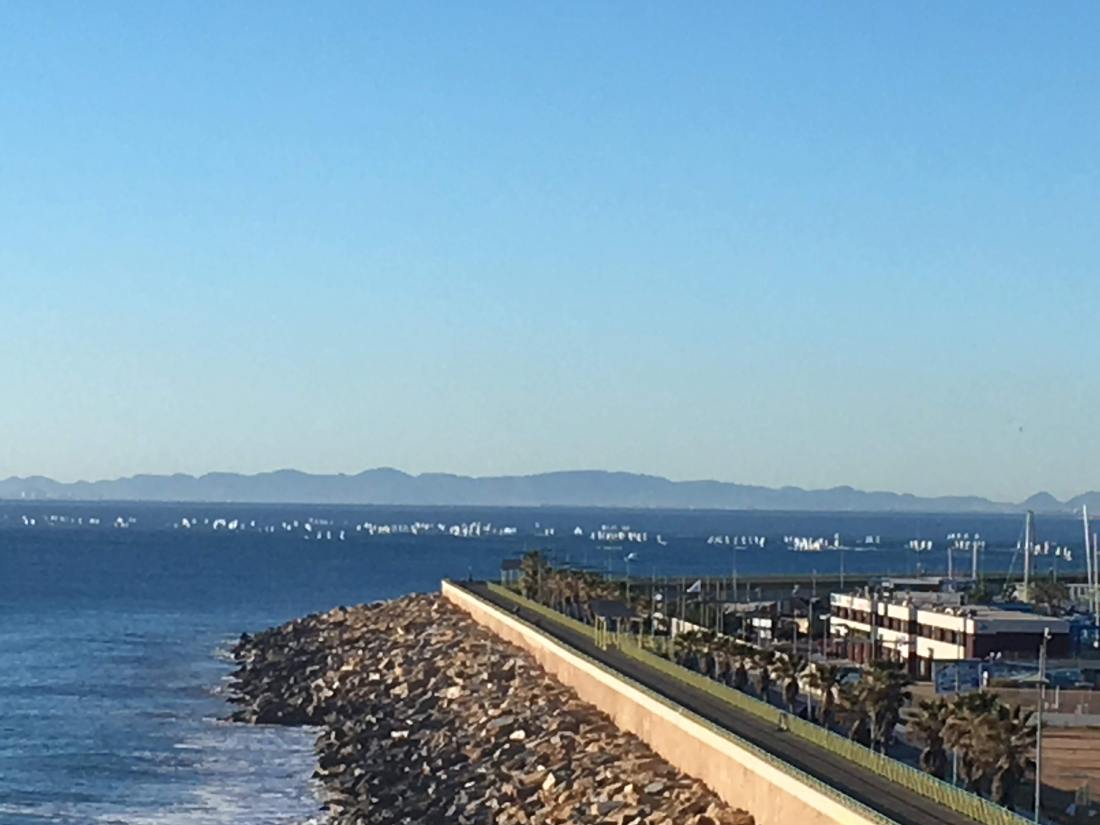
So that’s a quick recap of the neighborhood behind us, minus various kebab places and a Burger King. In front of us is the lovely, ever-changing sea and the boardwalk, or paseo, shown in the picture. The paseo provides excellent opportunities for people-watching. Lots of folks are out when we look out. Some are kids playing; other folks are purposefully striding, presumably on some important business. Lots of couples are simply strolling, often arm in arm, chatting or looking at the sea. Still others are walking their dogs, or, as the case may be, the dogs are walking them. It’s not the best drawing room in Europe – Napoleon reserved that honor for St. Mark’s Square in Venice – but it may well be one of the loveliest hallways.

Of course, people do work on the paseo. Waiters hustle customers in front of various restaurants and bars, assuring you that the best paella ever made awaits you in their establishments. Vendors spread out tarps most afternoons and hawk genuine knockoffs of handbags, shoes, and sunglasses. Note to self: Look up how to say “If that’s Louis Vuitton, I’ll eat my hat” in Spanish.

Our two most visible paseo neighbors, though, do solo afternoon floor shows for us most days. We’ve seen them so often we’ve named them. Mister Woo is a youngish guy, probably in his 20s, and he does backflips and cartwheels and the like for tips. To get people’s attention for his acrobatics, he yells “Woo! Woo!” (hence the name) and the claps six times. He never claps five or seven times; it’s always six. I find myself wondering if he’s a student of numerology and has some attachment to this digit. Whatever his motivation, you have to admire his consistency.

The other denizen of the paseo who’s garnered a moniker is Señor Groundhog. You’ll figure out the name by the end of the paragraph, I promise. He’s an older guy, maybe in his 40s, and he comes around siesta time, sets up a big speaker, and plays Andean panpipes to various popular tunes. It’s nicer than Muzak, although I do wish he would buy some new songs. Believe it or not, the theme from “Romeo and Juliet” gets old, and by now we’re all VERY clear that he’d rather be a hammer than a nail. And you haven’t lived till you’ve heard “Hotel California” at half speed on a panpipe. However, some days his music is a lovely soundtrack for a beautiful space. It just depends. Some days I like his stuff, and other days I threaten to go put €20 in his hat on the condition that he take his act on the road for the rest of the day.

So much for the paseo. We do actually have real people neighbors in our building. The first ones we’ve met are Pamela and Hans, two very nice people from Sweden who live on the floor below us. We’re having them over for wine on Monday. They will be our first guests since we’ve moved here, and we hope for a good maiden voyage entertaining. Wish us luck!


img_0841

The wheels on the bus go round and round

On my 16th birthday, my mother took me to the local office of the Texas Department of Public Safety so that I could get my driver’s license. While I was taking my driving test, she sat in the waiting room next to the mother of Bryan Dishman, a high school classmate of mine who also turned 16 that day. Since she and Mrs. Dishman had labored in adjacent rooms at Beaumont’s Baptist Hospital 16 years prior while waiting for Bryan and me to be born, there was a certain symmetry going on at the DPS that day. In any event, Bryan and I both passed our tests, received our licenses, and once again started a new phase of life for our moms and for us. And, of course, I’ve been driving ever since. Until now!

Mark and I have elected not to have a car here in Torrevieja, at least for the time being. In a city where parking is at a premium and in a country where gasoline is expensive, we just can’t get the numbers to outweigh the inconvenience, at least not yet. So mostly we’re walking or, for longer trips, taking the bus.

The bus system in Torrevieja is actually quite good. Several routes cover the city and reach the local hospital, shopping center, and church that we’re attending. Once we registered as residents (no mean feat, but that’s another blog post), we became eligible for bus passes that cost only €7 a year each. You do have to make an appointment to get your bus card; ours are scheduled for this Thursday and apparently last a grand total of six minutes for the two of us. Until then, we’ve been paying €1,35 per person per ride, which is quite reasonable.

It’s been a long time since I haven’t routinely driven, though, and that’s an adjustment. And there are some downsides to bus travel. Going by bus limits what you can carry. This may be an advantage in that circumstance forces you to shop selectively, but there’s no denying the convenience of being able to toss bags in a trunk and move on to the next errand. And we have had a couple of rather cold waits at bus stops; it is January, even in Spain. So I admit to the occasional bout of car envy when drivers whiz by.

It’s funny, though, because there are actually some really nice parts about our bus rides. For example, Mark and I are not focused on driving or navigating (and, in his case, arguing with the GPS, which mulishly refuses him so much as the courtesy of a reply). As a result, we can point out sights to each other and talk about places we should visit or at least look up on the internet. Too, bus riding makes for great people watching. Passengers can be great fun. On Sunday mornings when we go to church, the same three elderly women board the bus and get off at the city cemetery. I imagine them off to visit the graves of their husbands, standing by the plots and telling their departed about the weeks they had. Last Sunday, though, it was the driver who put on a show. This fellow obviously wanted to drive race cars on the Formula One circuit and had to settle for a municipal bus in Torrevieja. Time, tide, and our driver waited for no man, and any potential Sunday laying on of hands was displaced by our guy’s laying on of horns when the vehicles in front of him were going too slowly for his taste. Seriously, I saw one Mercedes pull into a side street just to let the bus pass before venturing out again at a sedate pace onto our mutual route. You can’t help but chuckle and wish for a seat belt.

By far the best part of riding the bus, though, is talking with your fellow riders. It’s remarkable how often somebody strikes up a conversation while we’re waiting, especially when they can tell from our accents that we’re from the US. Mostly people ask us what we think of Trump. FYI, we haven’t run into any Trump fans here. People are very open about their opinions and seem to want us to be as well. I even got a fist bump during a political conversation with a Finnish guy well into his 80s during a discussion of Brexit. We also had an interesting discussion about IMG_0971immigration with a mother and son who moved from Kazakhstan to Canada and a man originally from Ukraine but now living in the Netherlands. Actually, the only bus conversationalist who didn’t want to talk politics was a Russian woman who lives in Canada and is super bored in Torrevieja. She just wanted to talk about how bored she is. I felt sorry for her, but honestly the chat was, well, boring.
So that’s life on mass transit. We may rethink our no car decision at some point, but so far, so good. I wonder if Bryan Dishman would make the same choice if he were here?


Well, sheet!

Moving someplace new is always challenging, and the move to Spain has proved to be no exception. But who knew that our biggest glitch thus far would involve – drumroll, please- a fitted sheet?

Our lamentable, laughable tale started in our bedroom. The bed in the master in our apartment here was smaller than Mark and I wanted. We’re both big people, and my darling spouse has hinted that when I’m asleep I view the bed the same way Alexander viewed the world, i.e., as territory to conquer. So we investigated what’s available and opted for a “super-king,” which is European for “actually not as big as a US king-sized but made for Americans who can’t get over everything needing to be enormous.” A friend got us a great deal on a solid frame and mattress and even arranged for delivery of the new bed and disposal of the old one. Now, we thought, we’re in business!

Mark and I did realize that new, larger bedding would be required. We strolled down to a nearby linens shop and encountered our first complication. Spanish sheet sets, you see, come in two varieties. The Nordic variety does not contain a top sheet. Presumably this means that the Millennial disdain for top sheets is Scandinavian in origin, but we will leave that line of inquiry to some aspiring sociologist in search of a dissertation topic. Or perhaps a linguist will determine whether “going Nordic” is the bedding equivalent of  going topless at a beach. Anyway, the other variety of sheet set, or the Correct kind, as we refer to it, includes a top sheet. A friendly salesperson helped us select two Correct sets, ran our credit card, and reminded us not to wash these items in water over 40 degrees (Celcius) because they will shrink. Okay, hurdle overcome; sheets and pillow cases acquired.

Flushed with success, we ventured out to an even bigger linens store the next day. Thank heaven we had rented a car, because a duvet for a super-king is remarkably large and bulky. The duvet cover is small and easily transportable in comparison. What stopped us in our tracks, though, was new pillows for the pillow cases. It turns out that the standard Spanish pillow is narrower than an English bolster pillow, which turned out to be the size of pillow case from the sets we’d bought. And nobody in Spain sells EBPs anymore. Whether this is a reaction to Brexit or the settling of an old score from a long-ago futbol match I don’t know, but it was awfully disconcerting.

Here’s an aside; skip this paragraph if meandering storylines bother you. Our experience raises an interesting question: does every country have a slightly different-sized pillow, kind of like having a unique flag? If that’s true, given the proliferation of nation-states these days, there must be some pretty unusual cushions upon which to rest one’s head. There may even be an office at the U.N. whose mandate is to make sure that an emerging country doesn’t snag some other country’s shape. Can’t you see the correspondence now? “We regret to inform you that your application for Upper Bomswaznam’s national pillow has been rejected due to its being identical to the recently-approved Argostanian pillow. We suggest shaving an additional two centimeters off the bottom left corner before you resubmit your design.”

Anyway, world affairs aside, we trotted our orphan pillow cases home and puzzled about what to do. In the end, we stuffed our old pillows in and discovered to our delight that extra fabric in the pillow case doesn’t affect the quality of your sleep. Hooray! Honestly, I felt kind of smug about transcending national differences and being flexible in my practices. So happiness reigned in our casa until yesterday, when, stupidly, I decided that it was time to wash the sheets. Efficient soul that I am, I ran the washer during breakfast, remembering to use the 40 degree setting. That may have been my smuggest load of wash ever.

After breakfast I trotted the sheets and clothespins up to the roof, as our dryer is a big ball of fire 93 million miles from the Earth. Another even more efficient soul had pinned their bedding up first, and I noticed that it was so windy that one sheet that had only been attached with two clothespins had been torn from the line and was lying was on the ground. To be nice, I repinned my neighbor’s sheet and set about putting up my laundry. Then I decided (smugly) that MY sheets weren’t going to end up on our roof, so I put not two but NINE clothespins on EACH SHEET. NINE. And I left my laundry flapping in the hearty Mediterranean wind.

Everything was great until about 5pm, when Mark volunteered to go get the laundry off the line. He had an odd look on his face when he brought the basket into our little living room. “Did you hang up the bottom sheet on the line? It wasn’t there when I got the clothes.” I assured him that I had, and he nodded. “I figured you had. Since it’s been really windy all day, I looked around for our sheet. It’s not on our roof, but there’s a wadded up ball on the roof of the building next door that may be it. I got the number of the building administrator, but she doesn’t speak very much English. I think she said to go to the bar on the ground floor of that building when it opens at 7 and get the keys to building and the roof to go see.”

Well, sheet. The universe had noticed my smugness and given me exactly what I wanted. My sheet was not on my building’s roof.

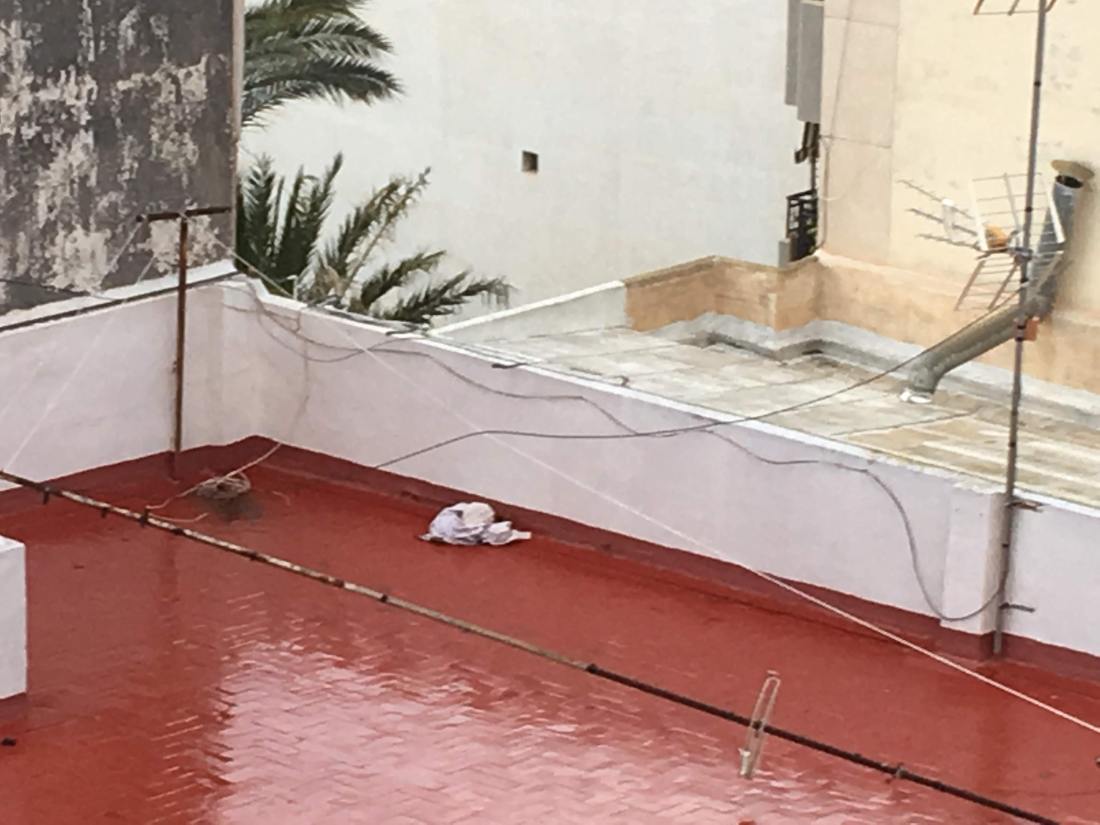
Suffice it to say that said sheet is still MIA. The bar had building keys but no roof keys. This was in keeping with the building, which has no elevator, so Mark discovered the lack of a roof key after climbing five flights of stairs. The building administrator still has no English, so we still have no sheet. But hope survives. Either one of the small piles on the next building may be our bedding (see attached picture), so we may ask a friend to help us with the administrator.

In the meantime, we’re using the other bedding set and get the giggles when we talk about our adventures in linens. And actually it’s probably a claim to fame. Most people have been three sheets to the wind at some point, but we’re one sheet to the wind. Now there’s something to be smug about! IMG_1007


The long and wining road

Mark and I rented a car this week and did some shopping and some traveling. We’ve been relying on buses and our feet for transportation, so it actually felt sort of odd to be in a car. Mark had to drive our baby blue Twingo (yes, that’s really the name of the car model!), because it had a stick shift. Using a manual transmission is one life skill I totally missed. Perhaps we can chalk that up to sexism: my dad taught my brother to drive a stick but passed on instructing my sister and me. Or perhaps teaching my brother was sufficiently traumatic that he left teaching Mary and me to Mom. We’ll never know!

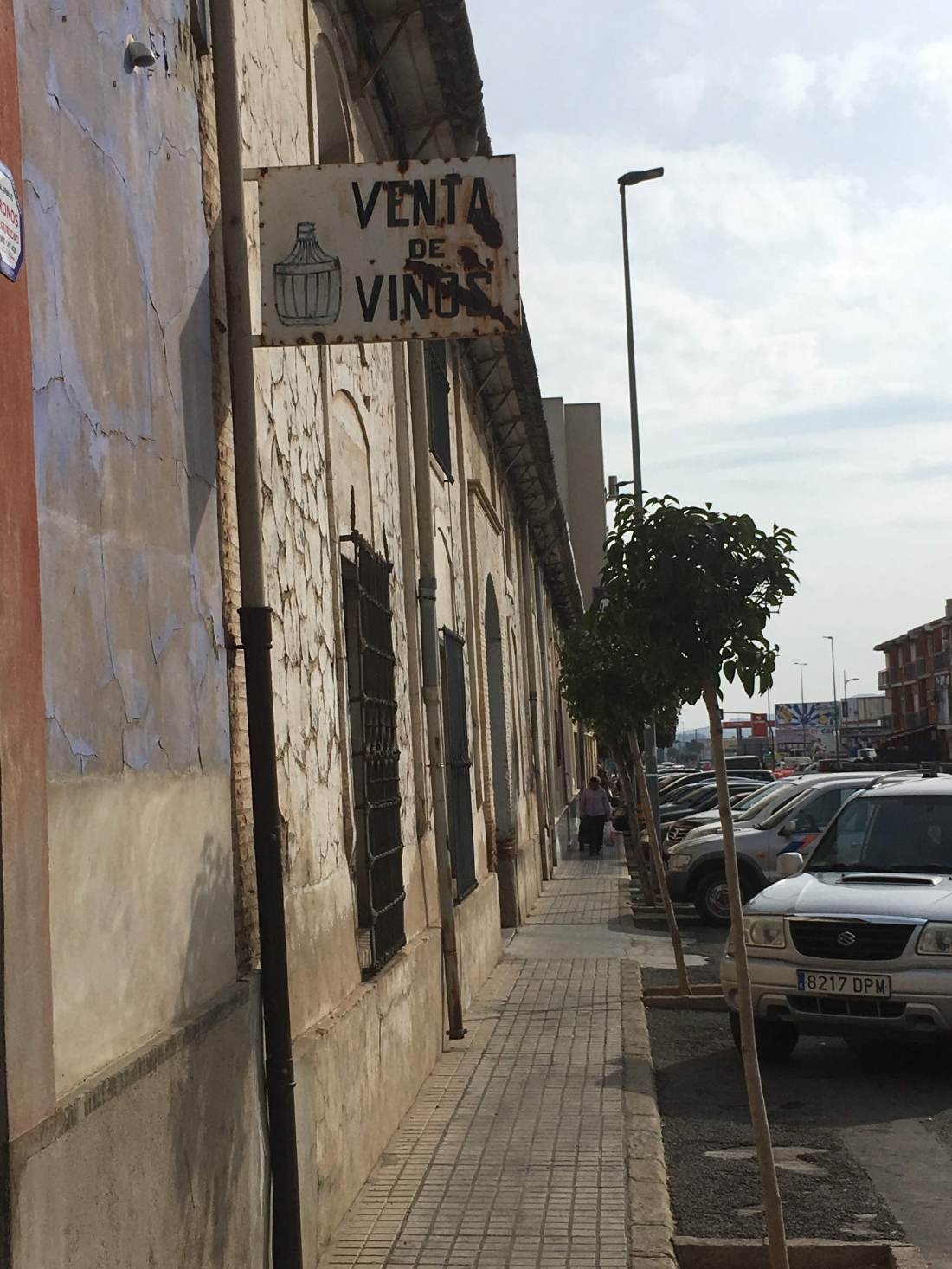
Happily, Mark’s driving and the Garmin’s navigation software got us safely to Jumilla, a city about 90 minutes from here. We drove through dry scrub terrain edged with distant mountains to get there. But for the signs in Spanish, you could think that you were in West Texas. As you see from the picture, though, Jumilla is very much a Spanish city.

And quite the city it is, especially for wine. Many vineyards call Jumilla home, so of course we had to go wine tasting. Maybe because it’s off season, or maybe because we just looked so darn cute and/or thirsty, the attendant at the first wine shop poured us almost full glasses of each of three wines. Granted, the glasses were small, but since Mark was driving and I was raised by waste-not-want-not Depression parents, I was exceptionally cheerful by the time we left the store. We went for a nice walk through downtown Jumilla for me to get some air and sober up a bit. Being exceptionally cheerful during said walk, I enjoyed the stroll immensely and found everything along the way very entertaining. The fact that the sidewalks moved around of their own accord, kind of like the stairways at Hogwarts, particularly amused me. The funny part is that they didn’t do that any more after lunch.

Said lunch took place at the lovely Restaurante de Loreto. If you’re Facebook friends with Mark, me, or both of us, you’ve seen pictures already. The meal was spectacular. We ordered croquettes in cream (filling unknown), artichokes in chocolate, a pumpkin, sweet potato, and fried egg in a giant wonton, and a cheese plate to die for. If you get to Jumilla and dine at the Loreto, please tell them the crazy Americans who ate a ton and laughed just as much sent you.

The last destination in Jumilla was a trip to the winery where our go-to red wine in the US is made. We did another, more modest tasting there and learned a lot about judging a wine’s age and about the various types of barrels used in the fermentation process. Having safely tucked a dozen of so bottles of Juan Gil’s next-to finest in the Twingo, we headed home.

The one detour was a stop in the city of Murcia, which boasts a beautiful cathedral, lovely Baroque buildings, and a fine museum. At least that’s what the tourism website says. We went to IKEA. Two shelves, four glasses, and a bunch of ideas later, we set out to return to Torrevieja. The glories of Murcia await a return trip!

IMG_0829

The rules of paella

Today’s Sunday, and we successfully navigated the bus system to get to the Church of England congregation we intend to worship with. The people are quite nice and have been kind enough to chat with us at the after-service coffee at a restaurant near the church. They tell us that they mostly understand us, despite our funny accents. The service is more high church than we’re used to; there’s a lot of standing and people bowing to the altar. It’s different from what we’re used to, but that’s how they do things, and they’re kind enough to let us participate. So rest assured that we are getting spiritual succor, and we’re in no more peril to our immortal souls than usual.

After church Mark and I went out to lunch at a restaurant near our apartment. The restaurant is called “El Pescador,” which means The Fisherman. We ordered paella partly because it’s delicious and partly because it’s the 34th anniversary of the evening we met. Lots of you have heard the story before – Cajun restaurant, blind date, mega attraction at first sight, Mark singing to me during dinner, etc., etc. etc., as the King of Siam would say.

Since that fateful night in 1985, we’ve gone out to eat Cajun food to celebrate our meet-a-versary. This year finding a Cajun restaurant was a little more complicated than usual. There’s actually an establishment at the edge of town that advertises itself as such, but frankly we were a little dubious and opted for El Pescador. After all, paella is a lot like gumbo mixed with rice and baked, isn’t it?

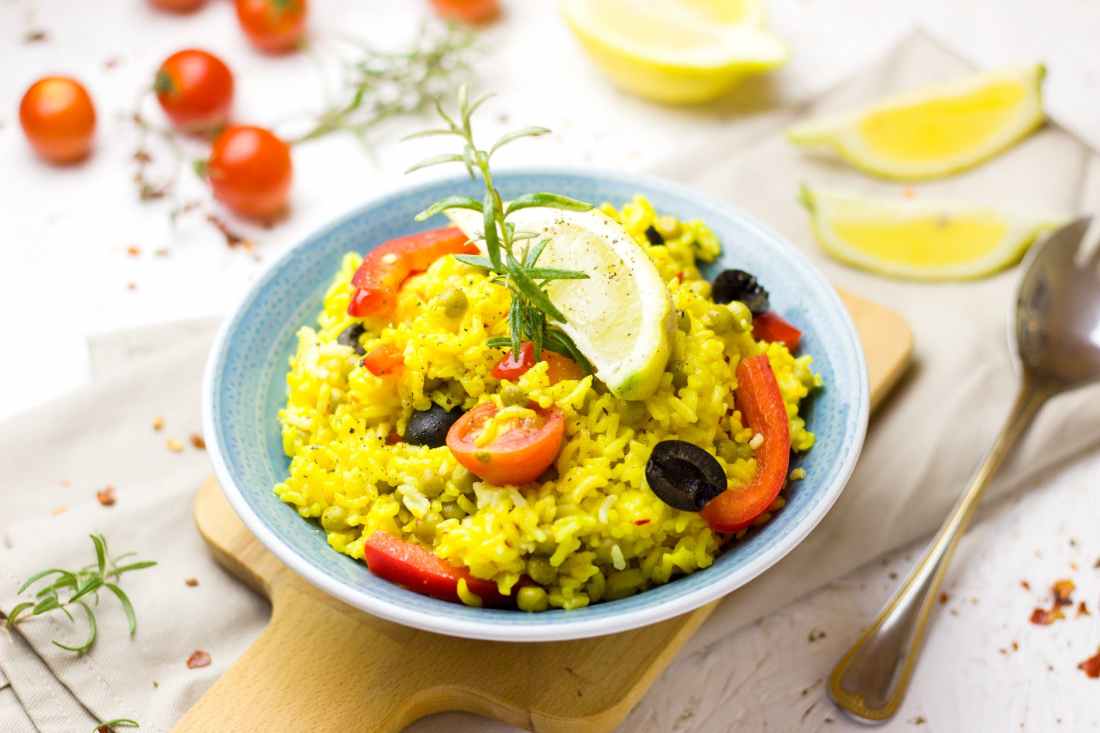
But it turns out there are rules about paella that you probably only grow up knowing if you’re from this neck of the woods. First and foremost, paella is a midday meal, not a dish for a late supper. One very obliging Spanish friend explained that paella is so heavy that it’s eaten at lunch and followed by a rest time. Works for me! So Mark and I forewent a Cajun-ish supper and celebrated at lunch. (Sure enough, I came home and promptly took a 90-minute nap.) So when in Spain, do as the Spanish do, and observe the rules of paella.

That experience is sort of what being in a new place is in a nutshell, isn’t it? You find touchstones – a church service, a scrumptious dish – and make it your own, while respecting and trying to participate the way the locals do. I may be a little too Methodist to bow to an altar, but standing for longer parts of the church service is okay. And paella in the midday instead of at night is fine. I had a great meal and a lovely nap, and really no one would care anyway if we broke with convention and chowed down at night. After all, paella was made for man, not man for paella! But for now we’ll keep on learning what our new neighbors have to teach us and being grateful for the old and the new in our lives.

blur bowl close up cook
Photo by Pixabay on Pexels.com


Canned goods

This breakfast didn’t come from canned goods, but it did come from a good can.

Let me explain. This breakfast of yummy pastries was born of two parents: the one-week anniversary of our coming to live in Torrevieja and the fact that I forgot to buy eggs or cereal yesterday. So while Mark was working on getting some paperwork together for yet another round with the Spanish immigration authorities (converting the visa into a residency permit, who knew?), I decided to amble down to the local pastelería and get breakfast treats. Only a few minutes and a couple of wrong turns later, it was mission accomplished and tummies filled. I can do this!

Thats where the cans come in, see? We are learning what we can do. We can buy pastries, get groceries, recycle our paper, hang up the laundry to dry on the lines on the roof, buy stamps, navigate the bus system- the list goes on. A week ago, we couldn’t yet do those things. Now we can. And, most importantly, over time what we can do will simply become what we do.

So cans are good. There are a lot more of them ahead, I hope. But even more inviting is the prospect of those cans morphing into a glorious, unremarkable, amazing life lived day-to-day. May it be so!


IMG_0825

The tune is familiar, but…

Yesterday Mark and I attended the matinee performance of the local symphony orchestra. I’m not much of a judge of orchestral quality; no one in the audience covered their ears, and the bows in the various sections seemed to be going the same way at the same time, so I guess they were pretty good. Even without much of a musical yardstick, though, we really enjoyed the performance.

One reason that the experience was so pleasurable, I think, was that much of the music was familiar. The orchestra played some Strauss waltzes, a selection from “El Lago de los Cines” (“Swan Lake”) and the Lone Ranger theme, aka “Final Obertura de Guillermo Tell.” One line in another piece was, I swear, the opening line from “The Eyes of Texas.” Hook ‘em, Torrevieja! (If that last comment is less comprehensible than the Spanish above, just ask me privately for an explanation.)

In a place where so much is foreign, the sense of musical recognition, of sharing in the experience, was especially welcome. But that desire for familiarity wasn’t limited to the music. Members of the orchestra began to look like people I knew. The Concertmaster was a slightly seedy version of a fellow we know from church in Austin, and the female French horn player was a dead ringer for a runner/lawyer pal from San Antonio. If you subtracted 25 pounds, the piccolo player looked just like our son-in-law. Even Mark spotted a trumpet player who could double for a law school classmate. So either there are only three dozen faces in the world and we just saw lots of familiar models yesterday or we both needed a bit of home at the concert.

Those players weren’t our friends, of course, and we knew that. But it was fun to have a touchstone for a while. That sense of security allowed me to move to a larger recognition of human character types among the musicians. There really are three dozen of those types, if that many. One of the violists was clearly one of those people who secretly wants to be Frida Kahlo. She scowled a lot during the performance and sported one of those super-floraly headdresses. Hers was listing alarmingly to starboard most of the program, though, and I really wanted to slip backstage during the interval and give it a good tug to straighten it up. Then there were the almost identical flutists, who were wearing almost identical aquamarine gowns. Perhaps they were bridesmaids at the same wedding where the bride assured them that they totally could wear the dresses again. But the prize for most fun clearly went to the Three Musketeers, who were probably were not French but were the life of the party on the third row of second violins. The best part is when they started dancing in their chairs while playing their appointed parts of the “can-can” song from Offenbach’s Orpheus in the Underworld. They were having a blast, and I sincerely hope to bump into them in a bar sometime.

So our time at the orchestra was enjoyable on many levels and met our need for a bit of home. How lucky we are to live with the familiar and the new, all at once!


IMG_0824